



Dear colleagues,
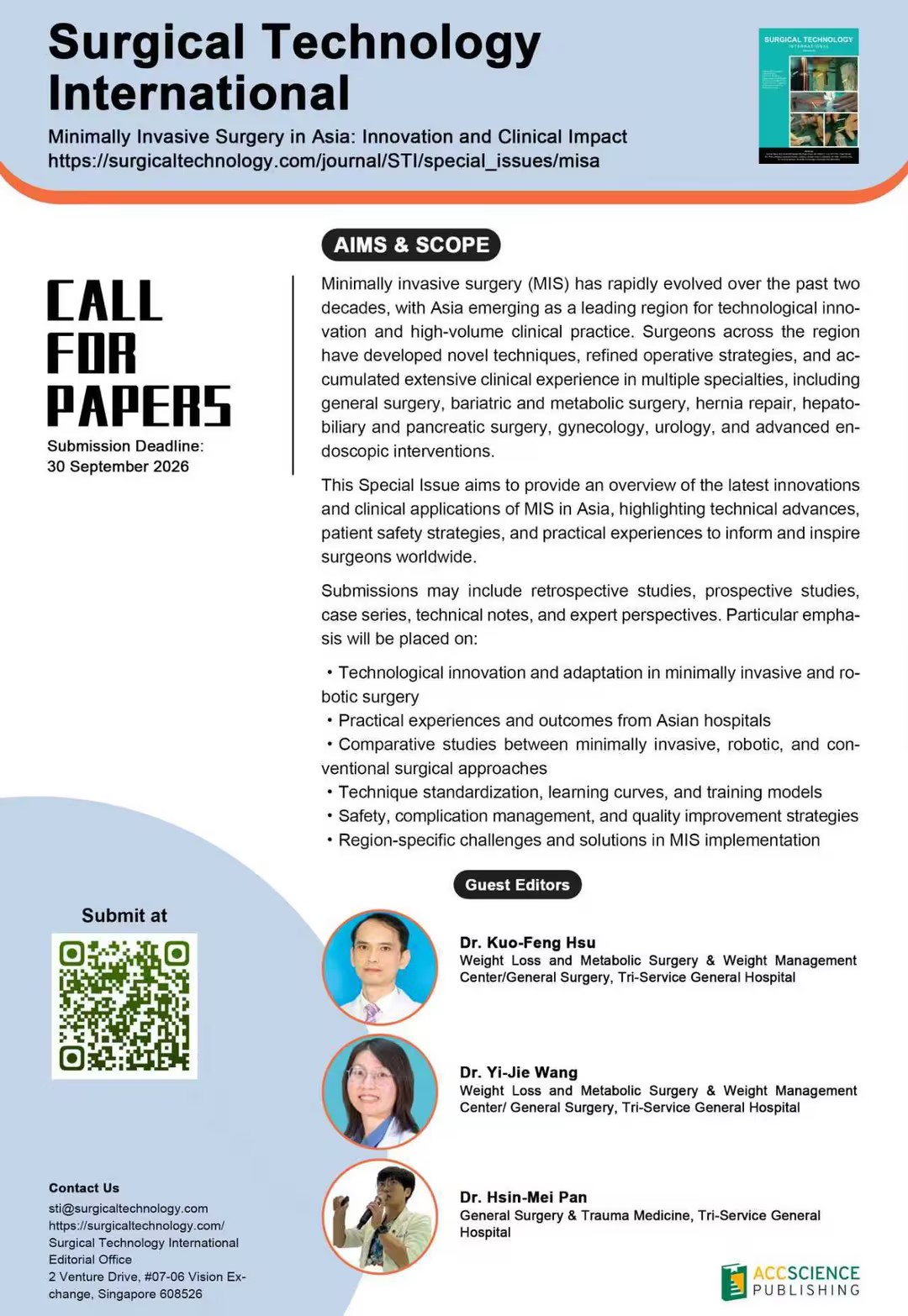
Minimally invasive surgery (MIS) has rapidly evolved over the past two decades, with Asia emerging as a leading region for technological innovation and high-volume clinical practice. Surgeons across the region have developed novel techniques, refined operative strategies, and accumulated extensive clinical experience in multiple specialties, including general surgery, bariatric and metabolic surgery, hernia repair, hepatobiliary and pancreatic surgery, gynecology, urology, and advanced endoscopic interventions.
This Special Issue aims to provide an overview of the latest innovations and clinical applications of MIS in Asia, highlighting technical advances, patient safety strategies, and practical experiences to inform and inspire surgeons worldwide.
Aims and Scope of the Special Issue
The primary objective of this Special Issue is to showcase high-quality clinical research that reflects the breadth and depth of minimally invasive surgery in Asia. Submissions may include retrospective studies, prospective studies, case series, technical notes, and expert perspectives. Particular emphasis will be placed on:
- Technological innovation and adaptation in minimally invasive and robotic surgery
- Practical experiences and outcomes from Asianhospitals
- Comparative studies between minimally invasive, robotic, and conventional surgical approaches
- Technique standardization, learning curves, and training models
- Safety, complication management, and quality improvement strategies
- Region-specific challenges and solutions in MIS implementation
Suggested Topics (Non-exclusive)
Potential topics of interest include, but are not limited to:
- Robotic-assisted and laparoscopic surgery in Asia, across all surgical specialties (Cardiothoracic, Colorectal, Gastrointestinal, Urologic, Gynecologic, etc.)
- Advanced laparoscopic techniques in hernia and abdominal wall surgery
- Minimally invasive bariatric and metabolic surgery
- Endoscopic and hybrid surgical approaches
- MIS in hepatobiliary, pancreatic, and colorectal surgery
- Surgical education, simulation, and credentialing in MIS
- Learning curves and volume–outcome relationships
- Patient-centered outcomes and enhanced recovery protocols
- Cost-effectiveness and healthcare system considerations
Significance and Expected Impact
This Special Issue is expected to serve as a valuable reference for surgeons and researchers by consolidating contemporary Asian experience in minimally invasive surgery. By emphasizing technical innovation, clinical experience, and practical strategies, the issue aims to bridge regional practice with global surgical discourse and foster international collaboration.